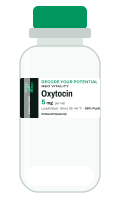
Oxytocin
Concentration calculator
Research summary
Oxytocin is a neuropeptide hormone long studied in animal models for its role in social bonding and affiliative behavior, which led to substantial interest in testing it in humans for social-cognitive conditions such as autism spectrum disorder. (Separately, oxytocin is FDA-approved under other names for unrelated obstetric uses —a different context from the research discussed here.)
Human trial results have been inconsistent. A meta-analysis of 12 randomized controlled trials covering 498 people with autism found modest, inconsistent improvements on specific measures, but no consistent effect on core symptoms. A major randomized, placebo-controlled, crossover trial found no treatment-specific effect on its primary outcome —both groups improved similarly, suggesting the strong effects seen in earlier animal research haven't reliably replicated in controlled human studies.
Sources: Meta-analysis, Frontiers in Psychiatry, 2024; PMC5031348; PMC6964112. Findings from published research —not a claim about this product, and not evidence of safety or effectiveness for human use.
Decoding the Benefits
- A cornerstone finding in social-bonding science for decades, which drove its testing in human social-cognitive conditions.
- A meta-analysis spanning nearly 500 participants with autism found measurable improvement on specific outcome measures.
Customer reviews
More in Endocrine