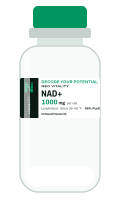
NAD+
Choose delivery frequency and start your subscription from your cart — combine multiple products into one subscription if they ship on the same schedule. Free shipping, always. Cancel anytime — one click in your account, no calls, no retention offers.
Concentration calculator
Research summary
NAD+ (nicotinamide adenine dinucleotide) is a coenzyme present in every living cell, central to converting nutrients into cellular energy and supporting enzymes involved in DNA repair and mitochondrial function. NAD+ levels are well documented to decline with age, which has driven substantial research interest in restoring it directly or via precursor compounds (NMN, NR) to study effects on cellular energy metabolism and age-related decline.
A 2024 randomized, placebo-controlled pilot study in healthy adults compared a single intravenous dose of NAD+ against a related precursor compound and a saline placebo. Researchers found intracellular NAD+ rose 53% versus placebo six days after infusion, though circulating (extracellular) NAD+ levels were largely unchanged, pointing to compartment-specific uptake. The same study noted participants receiving IV NAD+ reported more frequent moderate-to-severe infusion side effects —including gastrointestinal symptoms, increased heart rate, and chest pressure —than the precursor or placebo groups. This is one of the first rigorous randomized trials evaluating direct NAD+ infusion in humans; most other NAD+-related research has studied oral precursor compounds (NMN, NR) rather than NAD+ itself.
Sources: medRxiv, 2024 (Randomized, placebo-controlled, pilot clinical study evaluating acute Niagen+ IV and NAD+ IV in healthy adults); PMC8472622 (NAD+ decline with aging, overview). Findings from published research —not a claim about this product, and not evidence of safety or effectiveness for human use.
Decoding the Benefits
- A single IV dose raised intracellular NAD+ levels by over half within less than a week.
- One of the only rigorous trials to test NAD+ itself directly, rather than the precursor compounds most other studies rely on.