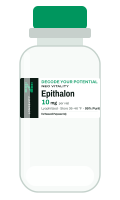
Epithalon
Concentration calculator
Research summary
Epithalon (AEDG) is a synthetic tetrapeptide developed by Vladimir Khavinson's research group, based on the amino acid composition of epithalamin, a pineal-gland extract. It is studied mainly for effects on telomerase activity and telomere length in cultured human cells.
In a 2003 study, Epithalon treatment of human fetal fibroblasts extended their replicative lifespan (Hayflick limit) by approximately 42% and activated telomerase expression in cells where it had been suppressed. A 2019 follow-up study reported effects on telomere length and mitotic index in stimulated human blood lymphocytes. This research comes primarily from one research group; independent replication in Western academic literature and human clinical trial data are both limited.
Sources: Bulletin of Experimental Biology and Medicine, 2003 (Khavinson et al.); follow-up lymphocyte study, 2019. Findings from published research —not a claim about this product, and not evidence of safety or effectiveness for human use.
Decoding the Benefits
- Extended cell lifespan by over 40% in a foundational study — a rare, directly measurable longevity marker.
- Reactivated telomerase in cells where that activity had previously shut down.