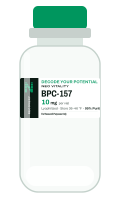
BPC-157
Choose delivery frequency and start your subscription from your cart — combine multiple products into one subscription if they ship on the same schedule. Free shipping, always. Cancel anytime — one click in your account, no calls, no retention offers.
Concentration calculator
Research summary
BPC-157 is a synthetic 15-amino-acid fragment derived from a protective protein found in human gastric juice. In laboratory and animal research it has been studied mainly for tissue-repair effects, acting through pathways including upregulation of growth hormone receptor expression in tendon fibroblasts, improved cell survival under oxidative stress, and promotion of angiogenesis.
In rat studies, BPC-157 accelerated outgrowth and migration of tendon fibroblast explants in a dose-dependent manner and increased maximum load-to-failure in biomechanical testing of healing Achilles tendons compared with untreated controls. Separate rodent studies reported improved tendon-to-bone and muscle-to-bone reattachment after surgical detachment. Human clinical trial data are lacking; nearly all available evidence comes from in vitro and animal models.
Sources: Journal of Applied Physiology, 2011; PMC6271067; PMC8615275; PubMed 16583442. Findings from published research —not a claim about this product, and not evidence of safety or effectiveness for human use.
Decoding the Benefits
- Tendon tissue held up better under mechanical stress, reaching higher load-to-failure thresholds than untreated tissue in published testing.
- Supports new blood vessel formation (angiogenesis), a process central to how damaged tissue rebuilds itself.
- Reattachment studies found faster, more complete healing where tendon or muscle had been surgically detached from bone.
Customer reviews
More in Recovery