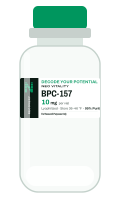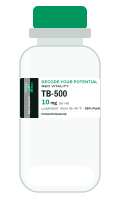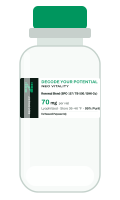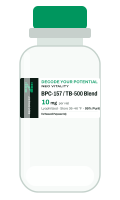
BPC-157 / TB-500 Blend
Concentration calculator
Research summary
This is a combination of two individually studied recovery-research peptides: BPC-157, a synthetic 15-amino-acid fragment derived from a protective protein in human gastric juice, studied for tissue-repair effects including tendon fibroblast migration and angiogenesis; and TB-500, marketed as a synthetic version of a short active region of thymosin beta-4, an actin-regulating protein studied for roles in cell migration and wound repair.
Each peptide has its own separate research base rather than the combination itself being independently studied. BPC-157 accelerated tendon fibroblast outgrowth and increased load-to-failure in healing rat Achilles tendons in published studies; thymosin beta-4 and related fragments shortened dermal wound healing time in mouse models, including diabetic and aged-mouse models. No published study has evaluated BPC-157 and TB-500 combined in a single preparation.
Sources: Journal of Applied Physiology, 2011; PMC6271067; PMC4963596 (component peptides' individual literature). Findings from published research —not a claim about this product, and not evidence of safety or effectiveness for human use.
Decoding the Benefits
- Pairs two independently documented repair mechanisms: tendon-strengthening on one side, cell-migration-driven wound closure on the other.
- Each half of the blend has its own distinct track record in published tissue-repair studies.
Customer reviews
More in Recovery